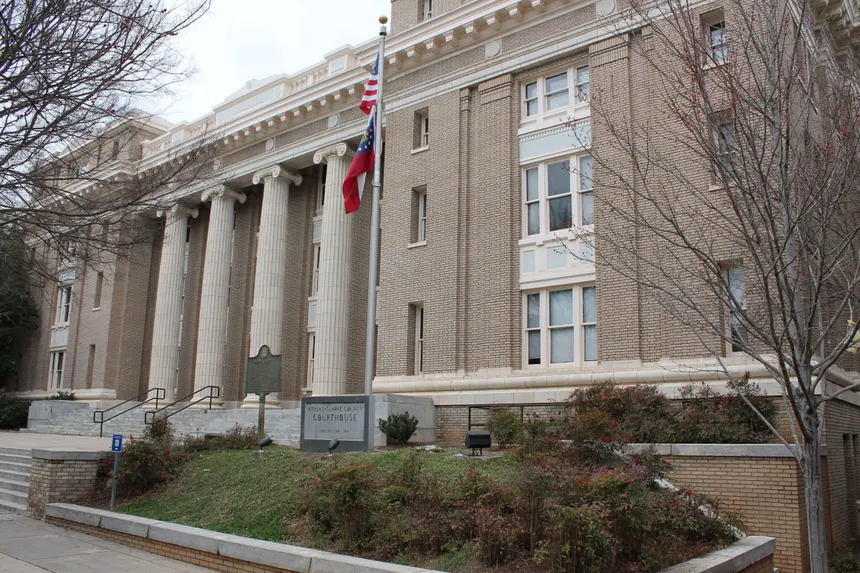
Executive Summary
An investigation into the Athens-Clarke County Police Department reveals a troubling pattern of lawsuits alleging misconduct since 2015, coupled with concerningly low crime clearance rates and a significant lack of public transparency regarding unsolved crimes. While the department maintains a “Transparency Hub,” the data available to the public falls far short of meaningful accountability, particularly for sexual assaults and robberies.
Lawsuits Against Athens-Clarke County Police (2015-2024)
1. Michael Roquet v. Athens-Clarke County (2016)
Incident Date: June 13, 2015
Filed: November 2016
Allegations: Excessive force, false police report, failure to discipline
University of Georgia student Michael Roquet filed suit after former officer Jonathan Fraser pepper-sprayed him and repeatedly struck him with a baton during an incident at the Marriott Courtyard. Body camera footage contradicted Fraser’s claim that Roquet had struck him first, showing instead that Roquet “did not take any aggressive or hostile action.” The lawsuit alleged not only Fraser’s assault but also the department’s systemic failure to “re-train, discipline, or terminate” officers who used excessive force. Fraser was eventually fired after an internal investigation.
Status: Lawsuit filed for unspecified damages
2. Taylor Saulters v. Athens-Clarke County (Settled 2019)
Incident Date: June 1, 2018
Settlement: $250,000 (March 2019)
Type: Wrongful termination (by former officer)
Officer Taylor Saulters was fired within 24 hours of hitting a fleeing felony suspect with his patrol car. The Prosecuting Attorneys’ Council of Georgia later deemed his use of force “reasonable” and cleared him of criminal charges. Despite this vindication, Athens-Clarke County fired him immediately, prompting his lawsuit. The county settled for $250,000 while denying all liability—a contradiction that highlights the department’s rush to judgment without proper investigation.
Key Detail: The neighboring Oglethorpe County Sheriff’s Office hired Saulters just two days after his firing, suggesting confidence in his conduct that Athens-Clarke leadership lacked.
3. Roger Williams v. Athens-Clarke County (Filed 2023)
Incident Date: October 17, 2021
Filed: August 2023
Allegations: Racial discrimination in excessive force discipline
Former officer Roger Williams, who is Black, filed a federal discrimination lawsuit alleging he was fired for an excessive force incident while “a number of white police officers accused of comparable or more egregious conduct were not terminated.” Williams’ supervising officer had allegedly violated excessive force policy “on multiple occasions without suffering consequences.”
The lawsuit details an incident where Williams tripped a woman during a domestic dispute arrest, causing her to fall and hit her head. He was fired in May 2022. Williams seeks back pay, lost benefits, and punitive damages.
Status: Pending litigation
The Unsolved Crime Crisis
Sexual Assault: A 77% Failure Rate
The most alarming finding in this investigation concerns sexual assault cases:
- 2017 Data: 57 rapes were reported to Athens-Clarke County Police
- Clearance Rate: Only 22.8% (approximately 13 cases)
- Unsolved: 77% of sexual assault cases remained without arrest
This means that 44 out of 57 rape victims in 2017 alone saw no justice, no arrest, and no resolution to their trauma. For context, the national clearance rate for rape is approximately 30-35%—low, but still higher than Athens-Clarke County’s performance.
According to police spokesperson statements from 2017, cases remain open indefinitely until “enough probable cause” exists for an arrest warrant. But what does “open” mean in practice when three-quarters of victims never see their assailants charged?
Unsolved Homicides: Limited Public Information
Athens-Clarke County does maintain a public list of unsolved homicides, including:
- Ernest Bernard Dean (1996)
- Linda Coleman (1996)
- Nakikita Lashonta Whitehead (1996)
- Demetrius L. Pope (2021)
The department employs two part-time Cold Case Detectives to handle decades of unsolved murders. While the 2024 arrest in the Tara Louise Baker murder case (23 years cold) demonstrates that cases can be solved with modern forensic technology, the staffing allocation raises questions about institutional commitment.
Robberies: Data Desert
Despite robberies being one of the most common violent crimes, Athens-Clarke County provides no public database of unsolved robbery cases. The “Transparency Hub” tracks robbery statistics but offers no case-specific information, clearance rates, or investigative status updates.
This absence is particularly notable given that the department has a “Robbery/Homicide Unit”—yet only homicide cases receive public transparency.
The Transparency Problem: What’s Missing
1. No Clearance Rate Dashboard
While the department’s “Transparency Hub” provides crime occurrence maps and counts, it does not publish clearance rates for any crime category except (partially) for homicides. Citizens cannot easily determine:
- How many robberies are solved vs. unsolved
- Sexual assault case resolution rates over time
- Trends in investigative effectiveness
- Comparative performance to similar jurisdictions
2. No Unsolved Crime Registry (Except Homicides)
Most police departments with genuine transparency commitments maintain public databases of unsolved crimes across multiple categories, often with:
- Case numbers
- Brief incident descriptions
- Dates and locations (general)
- Investigation status
- Ways the public can help
Athens-Clarke County provides this only for homicides—ignoring the hundreds of sexual assault, robbery, and assault victims whose cases remain unresolved.
3. Selective Information Release
The department’s approach to transparency appears selective:
- ✅ Press releases for arrests
- ✅ Crime occurrence statistics
- ✅ Use of force data (general)
- ❌ Clearance rates by crime type
- ❌ Officer discipline records (beyond lawsuits)
- ❌ Unsolved sexual assault information
- ❌ Unsolved robbery information
- ❌ Internal investigation outcomes
4. Inadequate Staffing Transparency
The public learns about critical staffing shortages only through indirect means:
- Two part-time Cold Case Detectives for decades of unsolved murders
- Five detectives handling all sexual assault cases (2018 data)
- No public information on detective-to-case ratios
- No transparency about investigator workload or resource constraints
When District Attorney Deborah Gonzalez’s office faced scrutiny in 2024, it was revealed that nearly 60% of assistant district attorney positions were vacant—directly impacting the prosecution of sexual assault cases. How much does police staffing similarly impact clearance rates? The public cannot know without transparency.
Pattern of Concern
Excessive Force Allegations
The lawsuits reveal a pattern:
- Roquet Case: Officer filed false report, used excessive force; body camera contradicted his account
- Saulters Case: Officer fired before investigations concluded; later exonerated
- Williams Case: Allegations of racially disparate discipline for similar conduct
These cases suggest either:
- A systemic problem with excessive force training and accountability, or
- A reactive management style that prioritizes public perception over thorough investigation
Neither interpretation inspires confidence.
The “Transparency Hub” Paradox
Athens-Clarke County launched its “Police Transparency Hub” as an apparent gesture toward openness. However, the hub primarily provides:
- Crime location maps
- Aggregate statistics
- General policy documents
What it doesn’t provide is the information citizens need most:
- Are crimes being solved?
- What happens to officers accused of misconduct?
- Which cases need public assistance?
- How does this department compare to others?
This is performative transparency—the appearance of openness without meaningful accountability.
Recommendations for Genuine Transparency
Immediate Actions
- Publish Quarterly Clearance Rates for all FBI Index crimes (murder, rape, robbery, aggravated assault, burglary, larceny, motor vehicle theft)
- Create Unsolved Crime Registries for sexual assaults and robberies, similar to the homicide registry, with:
- General incident information
- Investigation status
- Ways the public can provide tips
- Release Officer Discipline Data in aggregate form:
- Number of complaints received annually
- Complaint types and outcomes
- Discipline imposed (without identifying officers in minor cases)
- Publish Staffing and Workload Metrics:
- Detective-to-case ratios
- Average caseloads
- Clearance rates by unit
Systemic Reforms
- Independent Oversight: The Public Safety Civilian Oversight Board has faced resistance from officials. Genuine civilian oversight must be empowered and resourced.
- Sexual Assault Task Force: With a 77% non-clearance rate, sexual assault investigations require dedicated resources, specialized training, and trauma-informed practices.
- Comparative Benchmarking: Publish annual reports comparing Athens-Clarke performance to similar-sized jurisdictions.
- Body Camera Policy Review: The Roquet case showed body cameras catching officer misconduct. Full transparency about body camera policies, footage retention, and public access is essential.
Conclusion
Athens-Clarke County Police Department faces legitimate challenges: a college town environment, resource constraints, and complex community dynamics. However, these challenges do not excuse the department’s failure to provide meaningful transparency about its performance.
77% of rape victims in 2017 saw no resolution to their cases. That statistic alone demands urgent attention, resources, and public accountability. Yet the “Transparency Hub” provides no pathway for the public to even know this information without digging through years of data requests.
The lawsuits since 2015 reveal not just individual incidents of alleged misconduct, but a department that appears reactive rather than proactive—quick to fire officers, slower to discipline them, and inconsistent in its standards. The $250,000 settlement with Officer Saulters is taxpayer money spent because leadership acted hastily.
True transparency is uncomfortable. It means admitting failures, acknowledging limitations, and inviting scrutiny. Athens-Clarke County has created the appearance of transparency while withholding the information that matters most.
The community deserves better. Victims of unsolved crimes deserve better. And the dedicated officers serving with integrity deserve a department committed to genuine accountability and excellence.
Sources & Methodology
This report synthesizes:
- Court records from lawsuits filed against Athens-Clarke County (2015-2024)
- Police department data releases and statements (2017-2024)
- News reports from the Athens Banner-Herald, Red & Black, Atlanta Journal-Constitution, and local outlets
- Athens-Clarke County Police Department Transparency Hub
- Federal court filings (Middle District of Georgia)
Data Limitations: The sexual assault clearance rate (22.8% in 2017) is the most recent publicly available. Requests for updated clearance rates should be directed to the Athens-Clarke County Police Department’s Office of Professional Standards.
Contact for Tips on Unsolved Cases:
- Cold Case Unit: coldcaseunit@accgov.com or 706-705-4775
- Sex Crimes Unit: Detective Michael Poole, 762-400-7073
This report was compiled in November 2025. Information is based on publicly available records and may not reflect the most current developments in pending litigation.