How the Assassination of a Prosecutor Led to the Only County in Georgia Where the GBI Still Has Permanent Authority
On the morning of August 7, 1967, Floyd Hoard kissed his wife Imogene goodbye, finished his breakfast, and walked out to his new 1967 Ford Galaxy parked in front of his home on Highway 335 outside Jefferson, Georgia. The 40-year-old solicitor general had a busy day ahead—he was scheduled to testify before a grand jury about bootlegger A.C. “Cliff” Park and his criminal enterprise that had terrorized Jackson County for years.
He would never make it to the courthouse.
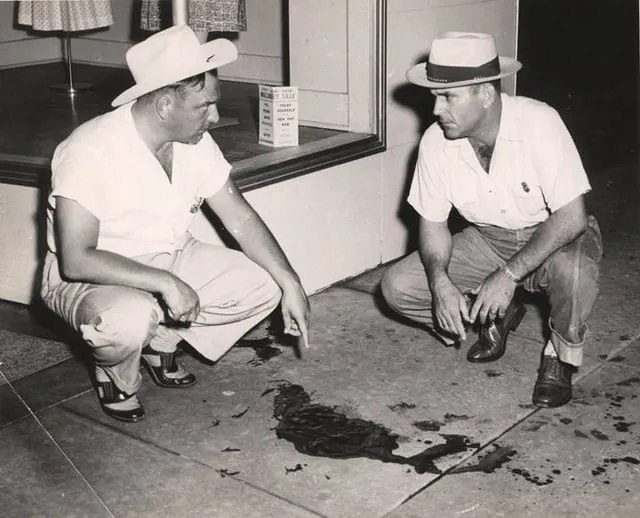
At approximately 7:25 a.m., Hoard turned the ignition key. Between six and ten sticks of dynamite—wired to the ignition system the night before—exploded with devastating force, killing him instantly and forever changing the landscape of law enforcement in Georgia.
His wife and four children—daughters aged 16, 9, and 7, and his 14-year-old son Dickey—rushed into the yard to find the car destroyed and their husband and father dead. The two oldest children waded into the smoking wreckage, trying desperately but futilely to save him.
What happened next would expose one of the most corrupt county governments in Georgia history and lead to unprecedented legal action that remains in effect to this day.
A County Beyond the Law
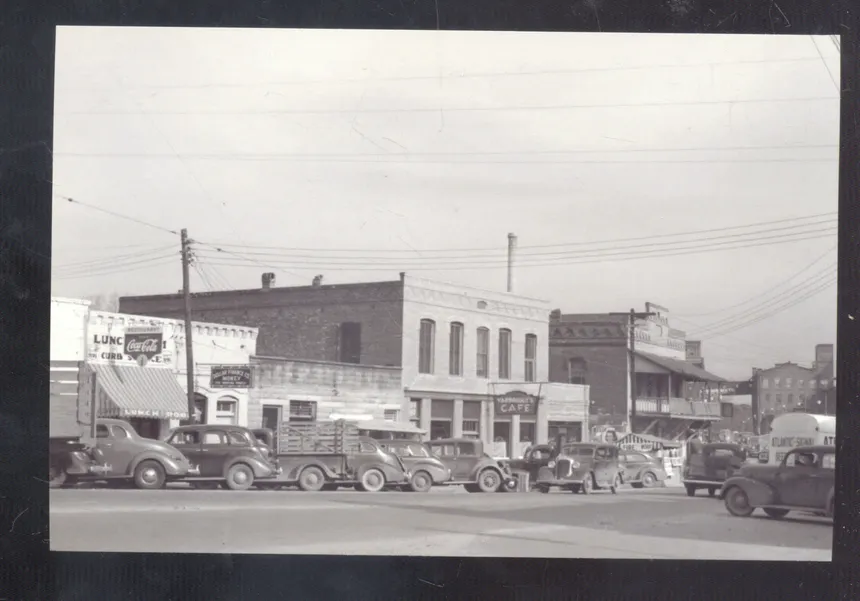
To understand why Floyd Hoard was murdered, you have to understand what Jackson County had become by the mid-1960s. Located in Northeast Georgia, the county had descended into a state of near-lawlessness. Bootlegging operations ran openly, car theft rings operated with impunity, and criminal enterprises flourished under the protection of corrupt local officials.
The situation had grown so dire that Governor Carl Sanders, whose term ended in early 1967, took the extraordinary step of issuing an executive order giving the Georgia Bureau of Investigation original jurisdiction in Jackson County. This meant the GBI didn’t need an invitation from local law enforcement to investigate crimes—a tacit admission that local sheriff Perry and other county officials could not be trusted.
This was not hyperbole. The corruption was real, deep, and dangerous.
The Man Who Stood Against It
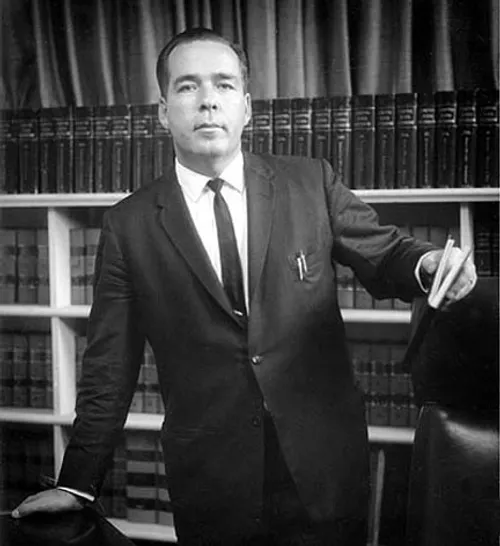
Floyd “Fuzzy” Hoard was not a typical small-town prosecutor. A Fayette County native who had moved to Jackson County in the 1950s after marrying Jefferson native Imogene Westmoreland, Hoard brought an unusual résumé to the job. He had played football at the University of Georgia before leaving for World War II, taught school, coached, and even played professional baseball for a time. After marrying into a prominent Jefferson family—his father-in-law was the town’s mayor and his brother-in-law was the police chief—Hoard studied law and passed the bar.
When he was elected solicitor general (now called district attorney) of the Piedmont Judicial Circuit in 1964, Hoard inherited a jurisdiction that had become accustomed to operating outside the law. Jackson, Barrow, and Banks counties were known throughout the state as hotbeds of criminal activity. Moonshiners, car thieves, and organized criminals had flourished for years with little interference.
Hoard was determined to change that.
Within days of taking office, he threw down the gauntlet by ordering raids on car theft operations. Over the next three years, he filed so many criminal indictments that the circuit had to hire a second judge to handle the caseload. He was relentless, aggressive, and effective—exactly the qualities that would get him killed.
The Bootlegger King and the Yellow House
At the center of Jackson County’s criminal network sat A.C. “Cliff” Park, a 76-year-old bootlegger from the tiny town of Pendergrass. Known to his underlings as “the old man,” Park had built a moonshine empire that operated from his residence and from a building he owned known as “the Yellow House.”
Park and his partner George Douglas Pinion had been working together in illegal alcohol sales since at least 1965, selling contraband whiskey and beer in Jackson County, where alcohol sales were illegal. But by early 1967, Hoard had set his sights directly on Park’s operation.
In late March 1967, Hoard began an investigation of Park’s operations without informing Sheriff Perry—a telling indication of where the prosecutor’s trust lay. Instead, Hoard brought in agents from the Georgia Bureau of Investigation. Together, they conducted undercover purchases from Park’s locations to build their case.
The raid was scheduled for Saturday afternoon, May 6, 1967. But on Friday evening, law enforcement discovered that Park was attempting to move large quantities of alcohol from his locations. Someone had tipped him off.
The scheduled raid was immediately executed. Agents seized $21,700 worth of contraband—31 cases of whiskey and 2,254 cases of beer. Park and his employee Albert Funderburk were arrested. On May 23, 1967, upon Hoard’s petition, a judge issued an order directing that both locations be padlocked.
For Cliff Park, this was intolerable. He had operated with relative impunity for years. Now this aggressive young prosecutor was going to put him out of business permanently.
On July 11, 1967, Park, Funderburk, and another employee entered guilty pleas for illegal alcohol operations. Park paid their combined fines totaling $6,300. But the legal troubles weren’t over—Hoard was preparing to bring additional criminal charges before the grand jury in August.
Park had enough. According to trial testimony that would later emerge, the old bootlegger decided that Floyd Hoard had to die.
The Assassination Plot
Park reached out to his “enforcer,” George Douglas Pinion, who had a reputation for using guns and administering beatings in the prosecution of their illicit business. Pinion, in turn, recruited three other men for the hit: Lloyd George Seay, John Hyman Blackwell, and George Iras Worley, a 40-year-old criminal from Commerce in northern Jackson County.
Worley initially demanded $7,500 for the job. After some negotiation through intermediaries, the price was settled at $5,500—the amount Cliff Park was willing to pay to have a prosecutor murdered.
The plan was straightforward but brutal: use dynamite to blow up Hoard’s car, killing him before he could testify to the grand jury on the morning of August 7.
Just before midnight on August 6, 1967, John Blackwell crept through an empty field on the outskirts of Jefferson, dressed in dark clothes and wearing black leather gloves. He carried the dynamite that would end Floyd Hoard’s life. Working in the darkness, he wired between six and ten sticks of explosives to the ignition system of Hoard’s new Ford Galaxy.
Less than eight hours later, when Hoard turned the key, the bomb exploded.
The Investigation and Manhunt
The assassination of a district attorney sent shockwaves through Georgia and made national news. Governor Lester Maddox appointed Solicitor General Emeritus Luther Hames of Cobb County to prosecute the case. The GBI, led by agent Bob Hightower (who would later become Cobb County’s Director of Public Safety), launched a massive investigation.
A critical break came when a house explosion in Johnson County, miles away from Jackson County, revealed an illegal whiskey still in the basement. Sheriff Roland Attaway connected the owners to the Hoard murder case. When the governor wanted to take over the prisoners, Attaway stood his ground: “No governor, this is our case in Johnson County. We can handle it and we’re going to keep the prisoners.”
The investigation revealed the full scope of the conspiracy. Lloyd Seay and John Blackwell turned state’s evidence, agreeing to testify against their co-conspirators in exchange for life sentences instead of death. Their testimony detailed how Park had ordered the hit and how the assassination had been carried out.
The Trials
The sensational seven-day trial gripped the state. Seay and Blackwell testified that Park wanted Hoard killed before he could testify to the grand jury. The evidence was damning: testimony about Park’s motive, the raid on his operations, the payoff for the murder, and the execution of the bombing.
Seay, Blackwell, Worley, and Pinion were all sentenced to life in prison.
Park pleaded not guilty and went to trial separately. He was found guilty and sentenced to death by electrocution. But the Georgia Supreme Court reversed the conviction on technical grounds—specifically, the failure to accord Park the right to both open and close the jury arguments in compliance with a Georgia statute that had been in effect since 1852.
Park faced a second trial. Again, he was found guilty. Again, he was sentenced to death.
The case remained in the courts for several more years as appeals wound through the system. Ultimately, Park’s death sentence was commuted to life imprisonment. He died in prison, never having faced execution. Two of his co-conspirators died violently after being paroled.
The Corruption Runs Deeper
What emerged during the investigation painted a disturbing picture of systemic corruption in Jackson County. There had been a leak inside law enforcement that kept Park and his criminal associates a step ahead of authorities. Sheriff Perry, whom Governor Sanders had identified as untrustworthy, was part of a broader network of corrupt officials, lawyers, and judges who enabled criminal activities to thrive.
As one account from the time stated: “There was corruption at all levels of local government, law enforcement, politicians, lawyers and judges.”
This wasn’t just about moonshine. Jackson County and the surrounding areas had become a hotbed for the Dixie Mafia’s operations in Northeast Georgia. The loose confederation of criminals operated car theft rings, committed contract killings, ran illegal gambling operations, and controlled the illegal alcohol trade throughout Barrow, Walton, Jackson, Oconee, Hall, and Gwinnett counties.
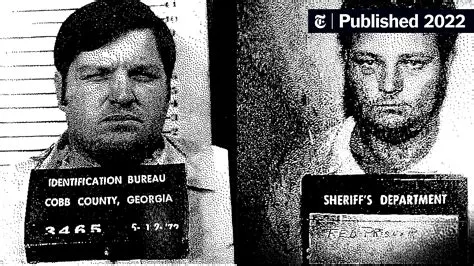
Billy Sunday Birt, who would later become known as “the most dangerous man in Georgia history,” operated in this same region during this same period, though his involvement with Park’s specific organization remains unclear. Birt and his associates were responsible for dozens of murders throughout Northeast Georgia from the 1960s through the 1970s, creating a reign of terror that wouldn’t be fully broken until 1975.
The Law That Remains
In the wake of Floyd Hoard’s murder, state leaders came into Jackson County and began the systematic process of cleaning up its deeply entrenched criminal elements and public corruption. But Governor Sanders’ executive order giving the GBI original jurisdiction was temporary—executive orders don’t have the force of permanent law.
That’s where a young grand juror named Lauren “Bubba” McDonald enters the story.
McDonald was a member of the grand jury that indicted Hoard’s killers. The experience of seeing such blatant corruption and its deadly consequences stayed with him. In 1974, McDonald was elected to the Georgia House of Representatives as a fresh-faced young lawmaker. His first order of business: making permanent what Governor Sanders had started.
McDonald authored local legislation that gave the GBI permanent original jurisdiction in Jackson County. The law passed, and it remains in effect to this day.
Of Georgia’s 159 counties, Jackson County is the only one where the GBI needs no invitation to do what needs to be done.
This unique legal status stands as a permanent reminder of the corruption that once consumed the county and the price Floyd Hoard paid for trying to clean it up. Nearly 60 years later, the GBI still maintains this extraordinary authority—a living testament to just how bad things had gotten.
The Personal Cost
For the Hoard family, the bombing didn’t just end Floyd’s life—it shattered their world. Dickey Hoard, then 14 years old, rushed outside with his older sister to try to save their father. What they found in that front yard would haunt them for years.
Dickey struggled deeply with his father’s murder. By his own later admission, he became “somewhat of a rebel” in the years following the assassination. But he eventually straightened out, became a schoolteacher and minister, and is now pastor of Oconee River Wesleyan Church in Watkinsville.
In 2007, forty years after his father’s death, Dickey wrote a book titled “Alone Among the Living: A Memoir of the Floyd Hoard Murder.” In it, he revealed his decision to forgive his father’s killers rather than seek revenge—a decision that stood in stark contrast to other similar crimes of the era.
Five days after Floyd Hoard died, bootleggers in west Tennessee targeted Sheriff Buford Pusser of McNairy County in similar fashion. Pusser survived the bombing, but his wife didn’t. Pusser’s tale of violent revenge became the basis for the “Walking Tall” movies and grew larger than life.
But as Dickey Hoard noted, forgiveness isn’t necessarily a path to The New York Times bestseller list. The story of Floyd Hoard’s assassination, his family’s suffering, and his son’s choice of forgiveness over revenge remains largely unknown outside of Northeast Georgia.
The Memorial
In 1997, thirty years after the assassination, citizens from Jackson, Barrow, and Banks counties—all three counties in the Piedmont Judicial Circuit—erected a granite memorial to Hoard at the old Jackson County Courthouse in Jefferson. The memorial stands as a reminder of the sacrifice Hoard made.
On August 7, 2017, a ceremony was held at the historic courthouse to mark the 50th anniversary of the bombing. But as the years pass and those who remember that August morning grow fewer, the question remains: who will keep the memory alive for future generations?
In an essay found after Hoard’s death, the slain solicitor had written prophetically: “We want in some way to ease our consciences and to make amends. We have learned our lesson in crime….we pledge activity for inactivity, courage for fear…”
Those words ring with particular poignancy given what happened. Hoard had pledged courage in the face of fear. He had chosen activity over inactivity. And he paid for it with his life.
The Aftermath and Legacy
The murder of Floyd Hoard marked a turning point for Jackson County and Northeast Georgia. In the aftermath, citizens found their voice and their courage. The assassination served as a wake-up call to a community that had grown complacent in the face of criminality.
Former Governor Roy Barnes of Marietta, who was a University of Georgia law student at the time, attended the trial every day against his father’s wishes. “It was something else,” Barnes later recalled. The case demonstrated that even in a county consumed by corruption, justice could prevail—though it came at a terrible price.
The cleanup of Jackson County took years and required the sustained effort of state and federal law enforcement. The FBI, ATF, IRS, and GBI all played roles in dismantling the criminal networks that had flourished in the region. Federal liquor conspiracy indictments in 1971 helped break apart the remaining bootlegging operations.
By the mid-1970s, the grip of organized crime on Jackson County had finally been broken. But the scars remained, and the need for permanent GBI oversight continued.
A Unique Legal Status
Today, nearly 60 years after Floyd Hoard turned that fateful ignition key, the law Lauren “Bubba” McDonald authored in 1974 remains on the books. Jackson County’s unique legal status—the only county in Georgia where the GBI has permanent original jurisdiction—serves as both a practical safeguard and a historical monument.
The law recognizes a simple reality: sometimes corruption runs so deep that normal checks and balances fail. Sometimes a county needs an outside authority with the power to investigate without permission. And sometimes the only way to prevent another Floyd Hoard is to ensure that those who would corrupt the system can never again operate with impunity.
McDonald, who made an unsuccessful bid for governor in 1990 and later served on the state Public Service Commission, could never have known that his first piece of legislation as a young state representative would become one of his most enduring legacies.
The Dixie Mafia Connection
While Cliff Park’s operation was relatively small and localized compared to the broader Dixie Mafia network, the Hoard assassination demonstrated the willingness of these criminal enterprises to eliminate anyone who threatened their operations—including prosecutors and law enforcement officials.
The broader Dixie Mafia operations in Georgia, centered in nearby Barrow County and led by Billy Sunday Birt, would continue for nearly a decade after Hoard’s death. Birt, Billy Wayne Davis, Bobby Gene Gaddis, and Charles David Reed formed the core of an organization responsible for dozens of murders throughout the region.
The Dixie Mafia operated under one inviolable rule: “Thou shall not snitch to the cops.” Violation meant death. This code of silence, combined with systematic witness intimidation and the murder of potential informants, made prosecutions extremely difficult—which is exactly why aggressive prosecutors like Floyd Hoard were so dangerous to their operations and why they were willing to kill to protect themselves.
The Georgia Dixie Mafia would finally be broken in 1975 when Birt confessed to multiple murders to exonerate seven innocent men wrongly convicted of a double homicide in Marietta. But by then, the organization had terrorized Northeast Georgia for nearly a decade, leaving a body count that some estimates place at over 50 victims.
Conclusion: A Warning Across Time
The story of Floyd Hoard’s assassination is more than a true crime tale from Georgia’s past. It’s a reminder of what can happen when corruption goes unchecked, when good people remain silent, and when those in power abuse their authority for personal gain.
It’s also a story about courage—the courage of one prosecutor who refused to look the away, who filed indictment after indictment even as the threats mounted, who raided operations even though he knew his own sheriff couldn’t be trusted.
And it’s a story about lasting change. The law that McDonald authored in 1974 ensures that what happened in Jackson County can never happen again—at least not without immediate state intervention. Every time the GBI investigates a case in Jackson County without needing local permission, they exercise authority that exists because a 40-year-old prosecutor was murdered for doing his job.
Floyd Hoard’s grave in Woodbine Cemetery bears a simple marker: “Floyd G. Hoard … Aug. 7, 1967.” The date speaks for itself.
But perhaps the better memorial is the one that appears in the Georgia Code—the law that gives the GBI permanent jurisdiction in Jackson County. It’s a living reminder that sometimes the price of justice is paid in blood, and that the duty of those who come after is to ensure that such sacrifices are not forgotten and that the changes they bring about endure.
On August 7, 1967, Jackson County lost a prosecutor. Georgia gained a precedent. And the law was changed forever.
Sources and References
Books:
- Buffington, Mike. A Conspiracy of Silence (Floyd Hoard murder)
- Hoard, Rev. Richard. Alone Among the Living: A Memoir of the Floyd Hoard Murder (2007)
- Birt, Ruby Nell, with Phil Hudgins. Grace and Disgrace (Georgia Dixie Mafia context)
Court Records:
- Park v. State, 224 Ga. 467, 162 S.E.2d 359 (1968) (First appeal)
- Park v. State, 225 Ga. 1, 170 S.E.2d 684 (1969) (Second appeal)
- Park v. Hopper, 506 F.2d 849 (5th Cir. 1975) (Federal habeas corpus)
News Articles:
- Galloway, Jim. “Remembering the assassination of Floyd Hoard, 50 years later,” Atlanta Journal-Constitution, August 5, 2017
- “Criminal History: Georgia DA Floyd Hoard killed by Dixie Mafia in 1967,” 13WMAZ, 2019
- “County was forever changed 48 years ago,” Mainstreet News, August 27, 2019
- “Murdered Jackson Co prosecutor remembered tonight in Jefferson,” WGAU, May 15, 2020
Podcasts:
- Infamous America: “DIXIE MAFIA: GEORGIA Ep. 4 | ‘The Assassination'”
- In the Red Clay (Billy Sunday Birt and Georgia Dixie Mafia context)
Government Sources:
- Georgia Bureau of Investigation historical files
- Georgia Supreme Court decisions
- Jackson County grand jury records (1967-1968)
Additional Resources:
- Jackson County Historic Courthouse and Historic Archives
- WikiTree: Floyd G. Hoard genealogical and biographical information
- Various Georgia historical societies and archives