In the shadow of one of Alabama’s most significant military installations, a little-documented scandal allegedly unfolded in the 1960s that would tie together a local Romeo, a powerful congressman, and international arms dealing. The case centers on John Hugh “Pat” Caylor of the Daleville-Enterprise area, who reportedly served federal time for perjury in connection with an arms theft at Fort Rucker—a case that has remained largely obscured from public view.
Fort Rucker and the Vietnam Era
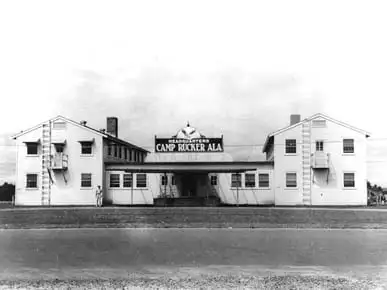
Fort Rucker, established during World War II in southeastern Alabama, became the U.S. Army’s primary aviation training center during the Vietnam War buildup of the 1960s. The installation’s hot, humid climate and challenging terrain made it ideal for preparing pilots for Southeast Asian combat conditions. This military expansion brought an influx of personnel, contractors, and equipment to the rural Wiregrass region—along with opportunities for those inclined toward illicit enterprise.
According to accounts from the period, the area around Fort Rucker attracted not only military retirees seeking affordable living but also elements fleeing the crackdown on organized crime in nearby Phenix City, Alabama, following the 1954 assassination of reform-minded District Attorney Albert Patterson.
The Dickinson Connection
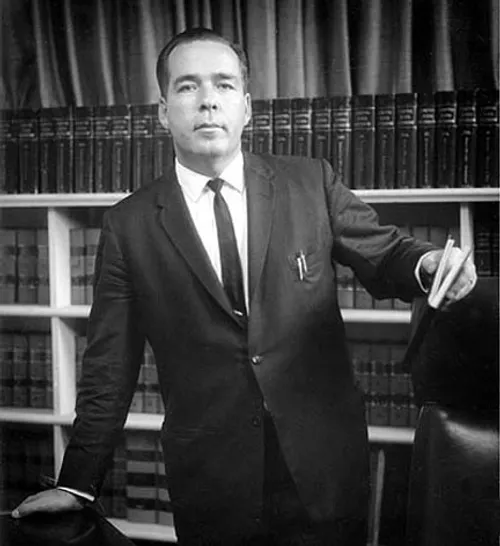
At the center of the alleged Fort Rucker arms theft scandal was Congressman William “Bill” Louis Dickinson, who represented Alabama’s 2nd Congressional District from 1965 to 1993. Dickinson, one of the first Republicans elected from Alabama in the modern era, rode the 1964 Goldwater wave to victory and built a career as a staunch advocate for military spending and national defense.
Dickinson’s district included Fort Rucker, and he became a powerful voice for the installation on Capitol Hill. He served as the ranking Republican on the House Armed Services Committee for over a decade and was instrumental in securing funding for Alabama’s military bases. His influence over military matters in the region was substantial—making any alleged connection to criminal activity at Fort Rucker particularly sensitive.
Pat Caylor’s Alleged Role
John Hugh “Pat” Caylor, described in family accounts as a handsome, charismatic figure from the Daleville area, allegedly became entangled in a scheme involving the theft of military equipment from Fort Rucker. According to a 2018 account by his relative John Caylor, Pat served federal time for perjury—specifically for lying to protect Congressman Dickinson’s involvement in the Fort Rucker case.
The allegations, as relayed by John Caylor, claim that Pat Caylor was rewarded with $500,000 for maintaining his silence about international arms theft. The stolen equipment allegedly included radar systems that were supplied to Israel and used to outfit Israeli jets during the 1967 Six-Day War. Israel’s stunning victory in that conflict was partly attributed to its air superiority, achieved through devastating preemptive strikes against Arab air forces—operations that required sophisticated radar and electronic warfare capabilities.
Family accounts describe Pat Caylor as someone who struggled with alcohol and made poor decisions when drinking, including an incident where he reportedly sideswiped nine parked cars in Daleville. Yet despite his personal demons, he allegedly held valuable secrets about powerful men from Washington who arrived with “suitcases full of money.”
The Confession
According to John Caylor’s account, Pat’s confessional period came in March 1981, when he visited his cousin who was recovering from surgery at a home in Enterprise. During this two-week period, Pat allegedly unburdened himself daily, sharing stories about the arms theft, his federal prison time, and the payment he received for his silence. His wife Doris had left him during his incarceration, adding to the isolation that may have prompted his need to confess.
The timing is significant: by 1981, Pat Caylor would have been several years removed from his alleged federal sentence, the Six-Day War was fourteen years in the past, and Congressman Dickinson was at the height of his power in Washington.
Unanswered Questions
The Fort Rucker arms theft case, if it occurred as alleged, raises numerous questions that remain unanswered. Federal court records from this period are not easily accessible online, making it difficult to verify the perjury conviction or identify the underlying case. No contemporary news coverage of such a scandal has surfaced, which is notable given that a sitting congressman implicated in international arms dealing would typically generate significant media attention.
The specific claim about radar systems being supplied to Israel for the Six-Day War is particularly difficult to verify. While Israel did have sophisticated intelligence about Arab air defenses and radar installations during the 1967 conflict, and while captured Soviet equipment was highly valued by Israeli intelligence, there is no publicly available evidence linking stolen U.S. military radar from Fort Rucker to Israeli operations.
The Broader Pattern
What gives the allegations some context is the documented pattern of military equipment theft from U.S. bases, both before and after the alleged Fort Rucker incident. More recent cases, such as the 2017 conviction of conspirators who stole and sold U.S. Army equipment from Fort Campbell via eBay, demonstrate that such thefts have been an ongoing problem. These operations have sometimes involved sophisticated networks moving equipment internationally, including to countries like Russia and China.
The Wiregrass region’s connection to organized crime elements, particularly those associated with the Dixie Mafia, also provides context. The area’s proximity to the Florida border and its military installations made it attractive territory for criminal operations ranging from bootlegging to more sophisticated schemes.
Legacy and Documentation
The Fort Rucker arms heist, as currently documented, exists primarily in family oral history and a single published account. While this doesn’t necessarily mean the events didn’t occur, it does mean that researchers face significant challenges in verification. Pat Caylor himself is deceased, as is Congressman Dickinson, who died in 2008 after a long battle with colon cancer, having retired from Congress in 1993 with a reputation as a respected defense hawk.
For those researching the intersection of organized crime, political corruption, and military installations in mid-century Alabama, the Caylor case represents a tantalizing but frustratingly incomplete thread—one that may connect to larger patterns of illicit activity in the region, or may represent the embellished memories of a troubled man seeking to explain his past.
Note on sourcing: The primary source for these allegations is a 2018 LinkedIn article by John Caylor titled “Inside the Dixie Mafia – Politics of Death.” No independent corroboration has been found in publicly available federal court records, congressional investigations, or contemporary news coverage. Researchers interested in this case may wish to pursue Freedom of Information requests or archival research in federal court records from the late 1960s and 1970s.